MES cost: build a budget around the work
Build an MES ownership budget that includes implementation, integrations, internal effort, recurring operation and exit work, with a worked example.
Build an MES budget from a defined production workflow, not an assumed price per user. Software is only one line in the decision: interfaces, internal effort, validation where applicable, devices, training, support and exit work all need owners. This guide provides a budgeting method, not a market price survey.
Start with the production boundary
Write down which plant, line, products, shifts and operations are included. Identify whether the system will merely display instructions or also dispatch work, enforce material checks, record quality results and post inventory transactions. Those are different responsibilities. A proposal for visibility cannot be compared fairly with a proposal for execution control.
Use one representative production order to walk through the scope. Include a partial completion, rejected material, a corrected quantity and a shift handover. Ask which system owns each decision and record. Keep an exclusions list beside the requirements so the team can see what remains manual or belongs to ERP, quality software or equipment controls.
Use a cost ledger with accountable owners
Separate one-time project work from recurring operation. Assign every row to either a supplier, an internal function or a deliberately excluded budget. Do not hide internal hours just because they do not appear on a supplier invoice. Equally, do not count employees twice when their work is already included in a contracted service.
| Cost bucket | Examples to scope | Evidence to retain |
|---|---|---|
| Implementation | Configuration, workflows, testing | Statement of work and acceptance criteria |
| Connections | ERP, machines, quality, identity | Interface inventory and support owner |
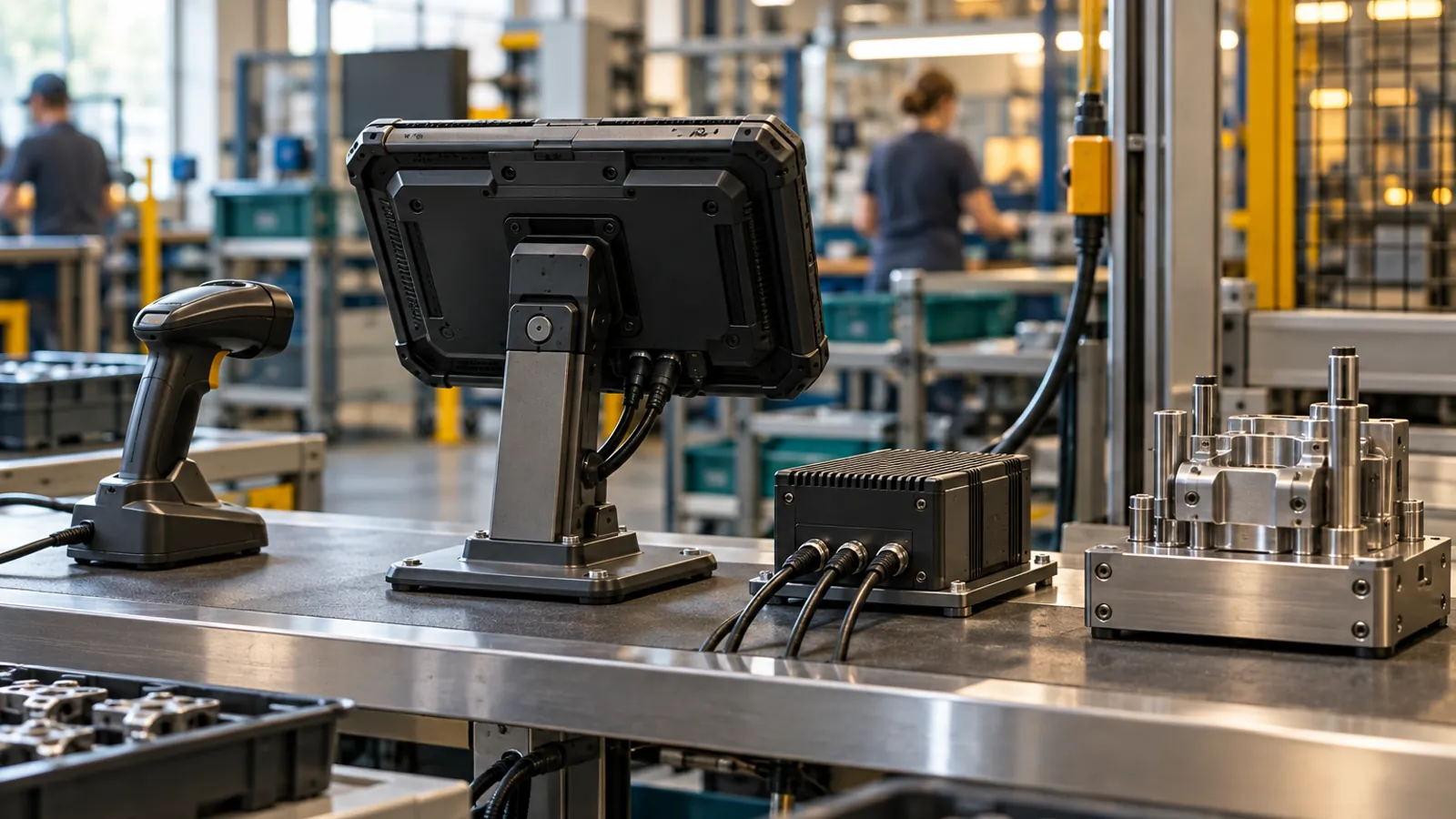
| Plant readiness | Terminals, scanners, network work | Device and site survey |
| Internal effort | Process owners, testing, training | Hours and loaded-rate assumption |
| Recurring operation | Subscription, support, infrastructure | Annual schedule and renewal terms |
| Exit | Export, archive, transition | Deliverables and access rights |
Work an illustrative five-year example
Suppose a hypothetical plant enters $80,000 for implementation and integration, 600 internal hours at $60 per hour, $30,000 per year for recurring operation and $10,000 for exit. Upfront cost is $80,000 + 600 × $60 = $116,000. Five-year ownership cost is $116,000 + 5 × $30,000 + $10,000 = $276,000. Average annual cost is $55,200.
These are invented planning inputs, not typical MES prices. They omit tax, financing, inflation, discounting and changing subscription tiers. Replace them with a scoped proposal and your own internal estimates. If the supplier quotes a monthly amount, confirm whether it is billed for every site and environment and whether a minimum commitment applies.
Normalize proposals before comparing them
Create a scope reconciliation column rather than simply sorting proposal totals. One supplier may include an ERP connector but exclude mapping and acceptance testing. Another may include a test environment but charge for additional storage or disaster recovery. Ask whether training covers every shift, whether travel is included and who pays to resolve defects at the interface boundary.
Return the same questions to every bidder. Record assumptions, exclusions, currency, contract period and payment milestones. Compare the cost of reaching an accepted production workflow, not a demonstration. If a requirement cannot be priced yet, isolate it as an unresolved allowance and name the person who must close the uncertainty before award.
Model downside without inventing precision
Use a base case and a downside case. The downside might require more internal testing, an extra interface or a longer period of parallel operation. Explain why each input changes. A contingency expressed as a percentage is only useful when the team understands which risks it covers; it is not evidence that those risks have been assessed.
For phased projects, a flat annual model is insufficient. Build dated cash flows showing when subscriptions start, when each plant goes live and when benefits can reasonably begin. Keep benefits in a separate ledger. A lower project price does not prove a better return if it leaves the most valuable workflow outside the implementation boundary.
Make the budget decision reviewable
Before approval, put the scope, cost ledger, unresolved assumptions and acceptance tests into one decision pack. Operations should confirm the workflow, IT and OT the operating responsibilities, quality the record requirements, and finance the treatment of benefits and internal costs. Procurement should check that contractual deliverables match the model.
Stop for an unexplained gap between proposal scope and required production behavior. A useful decision can be to fund a bounded discovery exercise instead of the full implementation. That exercise should end with artifacts the plant can use: a process map, interface specification, tested risks and a revised cost boundary. It should not simply produce another sales presentation.
FAQ
Is there a reliable price per user?
Not without a defined contract and scope. User counts can mean named accounts, concurrent sessions or something else. Compare the whole accepted workflow and the actual licensing metric.
Should internal salaries be included?
Include the effort as a planning resource and disclose how finance values it. Distinguish cash spending from opportunity cost rather than implying all internal time is a new invoice.
What should be approved first?
Approve a scope and evidence plan with accountable owners. If integration feasibility is uncertain, make discovery a defined deliverable before authorizing a larger rollout.
Continue your decision
- Cloud, plant-hosted or hybrid MES?
- MES versus ERP: draw the responsibility boundary
- Write an MES RFP suppliers can actually price
- MES licensing: questions before signing
- Budget MES integrations by transaction and failure path
- Plan the MES exit before the entry
Use the mes ownership cost to document your own inputs. Compare operating models on the comparison page.
Sources and scope
- NIST Smart Manufacturing — Official research context for manufacturing systems. The decision worksheets in this guide are editorial recommendations, not NIST requirements.
Examples are hypothetical and are not measured customer results, supplier quotations, or evidence of professional review. Prepared on October 30, 2026; confirm current requirements with the relevant official body and your responsible specialists.